Evaluations and Expectations : Tips for the Study Abroad Advisor

By: Missy Gluckmann, Founder of MelibeeGlobal.com

If you’re a study abroad advisor, you will get the magnitude of this question:

How can you collapse many days worth of information on preparing for study abroad into
your short pre-departure meeting?

One could liken covering what is vital in a pre-departure meeting to solving the Rubik’s Cube with one arm tied behind your back. It seems to be a mission impossible!

Students on lecturerThe reality is that there is simply too much to cover and increasing pressure to talk about logistics of getting from point A to point B. (I won’t even get into the “necessary” paperwork that has to be checked before departure.) Couple that with the fact that pre-departure meetings are often scheduled during a busy time of the academic year and students typically don’t read the detailed packets of information that are thoughtfully provided, and you can be left feeling rather defeated in your role as a study abroad advisor.

Ideally, the goal is to set expectations and to transfer knowledge about culture. With the advent of open source evaluations, the advisor’s role of inspiring students to carefully consider what to expect when they’re abroad becomes much easier.

Perhaps Terrell Owens’ quote best sums up the value of expectations:

“If you align expectations with reality, you will never be disappointed.”

Or at the very least, one hopes that your students will have a much better idea of what they’re stepping into!

Here are 3 steps to guide study abroad advisors in setting cultural and programmatic expectations for study abroad students:

1) Look to the past, first.
You’ve heard the expression, ‘you have to know where you’ve been to know where you’re going’. This applies to setting expectations for study abroad too. Through the abroad101.com website, you can look up a specific program and read comments related to each category (such as housing, safety, food, etc.) as an initial starting point. What common concerns or feedback have students shared year over year via evaluations? Where have they rated fewer stars? Have they consistently commented about differences in housing and the type of food available at self-contained campuses abroad? Are there concerns about socializing with locals? Past evaluations will quickly surface common categories that students have felt motivated to share specific feedback about. These categories can translate into a roadmap for areas of focus in your upcoming pre-departure meeting, as these are the “hot buttons” that have come up time and time again, according to your customers (students). By looking to the past, we can see where we can set better expectations for the students (and their parents too).

2) Glean insights
Now that you know where to focus, you’ll need to carefully consider what students are saying about these “hot button” topics. Are the comments “one offs” or is there a pattern? Was the student particularly “picky” or was the feedback ubiquitous and verifiable?

I researched evaluations from one summer program in Quito, Ecuador – a place that I’ve been to twice – that carries a serious reputation for being unsafe. Here are a couple of comments that allow us to easily address expectations of safety :

“There is an overall inevitably high safety risk in Quito, however, I was
fine having taken proper precautions.

Another student candidly notes:

“Americans were definitely targeted but generally just for petty theft, nothing violent. I had my purse slashed and wallet stolen. A friend had his pocket slashed and wallet stolen. Both were on crowded city buses. However, these were the only incidents our group had, probably because we were given a very thorough briefing on safety. A group from another school that we encountered at one point said half of their students had been the victims of petty theft.”

These types of comments are incredibly valuable because they provide REAL accounts about what can happen in Quito. This also provides an opportunity to remind students that petty theft happens in their home country as well as in Western Europe (for example, my sister’s camera was stolen in a movie theater in Paris, France.) Theft happens. Setting expectations of how to avoid it by sharing comments like these is priceless. It opens the dialogue about what to pack (jewelry is completely unnecessary) and how to carry what you bring (put your money in a front pocket, skip the wallet and pocketbook, carry a slash proof travel pouch, the risk of taking crowded buses vs. traveling on public transportation during off peak hours).

Bold, truthful statements will help students (and parents) to set realistic expectations. They’re the kind of banter that is not included in marketing brochures, for obvious reasons, but the type that sincerely and authentically inform.

3) Tap into Culture
If we carry on with the example of safety in Quito, we step into a beautiful opportunity to create dialogue about culture. If we don’t, students (and parents) may be left with the impression that Ecuadorians are perpetual thieves or that you cannot step out of your homestay without losing your wallet.

By taking time to share the economic realities of Quito, students will have a better understanding of the WHY behind the expectation you’re setting. As Rebecca Adams de Garate, co-founder of El Nomad, explains “Minimum wage in Ecuador is a little over $300 per month. If the household has only one working parent, several children and earns only Ecuadorian minimum wage, pickpocketing is an easy way to make money. Things like smart phones, tablets and digital cameras are very expensive in Ecuador, so there is a very active black market for such stolen goods, especially in Guayaquil and Quito.” Improving expectations and providing the cultural realities – now you’re not only preparing – you’re truly educating!

For those of you who do not have a large enough study abroad population to host a group pre-departure meeting or you recruit students from many schools across the country, one solution for enhancing expectations through evaluations is to pull together links from several abroad101.com reviews and share them (by category, such as housing or safety) to include in your communication to students – whether it be a newsletter, a virtual pre-departure program, or via a PDF of your pre-departure materials.

No matter the method, setting expectations will make for a more smooth landing for everyone involved in the program – administrators, faculty, host country staff/homestay families and host country nationals, parents – and of course, the students!
About the Author:

Melissa Gluckmann, contributor to the Studyabroad101 Blog and founder of Melibee GlobalMissy Gluckmann is the Founder of Melibee Global, which aims to elevate the discussion about education abroad, culture, diversity and the lifelong path to global citizenship by offering trailblazing tools, speakers and professional development for the global education and travel communities. Raised in New York, Missy has lived abroad three times and traveled to dozens of countries. Missy currently resides in North Carolina and experiences culture shock there on a daily basis! She can be followed on Facebook and Twitter.

Parents: Encourage Your Teen to See the World

Parents: encourage your teen to see the world and gain worthwhile experiences this summer!

For many teenagers, it can be tempting to spend summers off from school doing a whole lot of, well, nothing – going to the beach with friends here or there, sleeping in late, playing a few games of pick-up basketball, and basically just hanging out. And while it’s true that sufficient sleep is important for your growing kids, and some amount of downtime can also be a great idea — two and a half months of doing nothing but lounging around watching TV is maybe not the healthiest option.

Encouraging your teens to get out and have some worthy, productive summer experiences is super important – for you, and for them. This is especially true if your teen is hoping to go to college, and possibly even win a scholarship or two. After all, what’s going to look better to a college admissions board – months of sitting around at home, or a worthwhile volunteer program?

There are many different summer activities out there for high school students, but one of the best, and most beneficial, is the option of studying or volunteering abroad. High school study abroad has been on the rise for a few years now, and there are many reasons why:

1) Becoming proficient in a foreign language is becoming increasingly important in today’s world. And because younger students learn faster than college-aged students, your teen is more than likely going to be able to soak up another language pretty fast – giving him or her one awesome, marketable skill for the future.

2) Study abroad looks wonderful on college applications and resumes. Because it’s possible to earn college credit or community service hours while abroad, your child’s study abroad experience will signal to college admissions counselors that he or she takes academics seriously. In addition, study abroad really helps imbue students with vital global leadership skills and a more balanced, worldly perspective.

3) While abroad, your teen will receive a much richer education than a normal classroom would provide. Study abroad programs offer a chance to learn about a country’s language, history, and culture – while living in that country! This kind of in-depth, culturally-enriching education will be invaluable to your teen.

4) Gain good contacts and networking prospects for the future. You never know who you’ll meet when you seize an opportunity like the chance to study abroad. Other than gaining good skills for a future job (it’s not that far off!), it’s entirely probable that your child could make some worthy connections for the future – and possibly even score a potential summer internship or employment opportunity.

5) Studying abroad is an amazing experience. Your child will undoubtedly achieve new levels of maturity, focus, and tolerance while studying abroad – and, of course, it’ll be a wonderful, once-in-a-lifetime experience!

And the best news? High school study abroad doesn’t have to be expensive! Many programs offer scholarships, financial aid, or fundraising guides. So, start encouraging your teen to get out in the world and have a life-changing study abroad experience!

Guest author-
Justine Harrington
Program Advisor | SPI Study Abroad

Thinking of the perfect gift for your host family


Want to read insider reviews from fellow study abroad students? Click here to find your perfect study abroad program!

So you’ve packed your clothes, guidebooks, cameras, and other essentials from home that you’ll need while you’re abroad. Before trying to stuff the last couple square centimeters of your luggage with items that you probably won’t even use, be sure to save space for a gift to give your host family! Not only do you want to make a good impression and show your gratitude for opening up their home to you, but if it’s done right, this small gesture can be a great way for them to get to know you! Some of the best gifts are those that spark meaningful conversations that can set the tone for the rest of your stay.  Continue reading

If I Had a Study Abroad Do-Over

Angie Orth

Angie Orth, courtesy of angieaway.com

Today we have a very special guest on our blog. We are honored to feature the lovely and VERY well travelled Angie Orth, who studied abroad in Paris back in 2003. Today Angie has a successful travel blog that documents her jaunts through the slums in Kenya to gelato in Rome and everything in between. We asked Angie if she could reflect a bit on her own study abroad experience and how it’s shaped who she is today. Here’s what she had to say.

Continue reading

How Much to Tip While Studying Abroad? A User’s Guide

2010-08-20 Brazilian currency

photo credit:
hollywoodsmile78

A great way to experience your new country is to check out the local restaurants and cafe’s. Experience the food, practice your language skills and absorb the new culture. It’s important however, to know the tipping etiquette. Not all countries are created equal in this manner so it’s important to know the individual customs.

Here’s the first piece of insight. America is the only country where people tip as much as 20% of the bill. This is extremely high compared to many countries who tip 10% at the most, if at all.

Below see more of what is customary around the world. If you find yourself unsure, just play it safe and follow what the locals are doing. Also, don’t be afraid to ask locals!

Anyone have any funny (or not so funny) stories of tipping gone wrong? Tell us about them in the comments!

Paris Cafe

photo credit:
Mr. Mystery

Most European Countries: Look on the bill to see if a “service charge” has been added. This often can replace the need for a tip, but typically it’s courtesy to tip 5-10% in addition to the charge. This ends up being a very small amount and many people simply leave extra change as the tip. (As is the case in France) The exception is the UK where tipping in addition to the service charge isn’t necessary.  Many Eastern European countries don’t include service charges, so tip 10-15%. When in doubt, leave 10%. You won’t risk insulting anyone, and they’ll likely be happy to make extra money off tourists who don’t understand the local culture.

Latin America: The rules for this continent align closely with Europe, although everywhere has exceptions. Many restaurants will include a “service charge” in which case, it’s a safe bet to tip an additional 10% just in case. There may be places where it’s not necessary, but you won’t risk insulting anyone if you do leave a tip.

Restaurants and fountains in Xi'an

photo credit: 
eugene

Asia: Here’s where things get complicated, so pay attention. There’s no cut and dry answer as each country varies dramatically. Sometimes if the location is very westernized, it will be better to leave a tip as they will expect the western customs.

Singapore: It’s not necessary to tip in Singapore. Some luxury hotels or restaurants may accept a small tip, but that’s it. Note: Don’t tip at the airport as it’s actually outlawed. Want to read more about Singapore? Our Global Ambassador, Theresa, wrote about her trip to Singapore.

Japan: Don’t tip, ever.  Wait staff won’t know what to do with the extra money and may even be insulted.

Thailand: It’s not necessary, yet it may be a good idea to leave a little extra for exceptional service. You may also be expected to tip a small amount if you’re at a luxury hotel or restaurant.

South Korea: Tipping is not expected and some nicer restaurants or hotels will add a service charge. No need to tip anything extra.

Taiwan: Restaurants will likely add a small service charge and tipping extra is not necessary. Want to know more about living in Taiwan? Our Global Ambassador, Jake, writes all about it in his post about cultural differences between Taiwan and America.

Cambodia: Like the rest of Southeast Asia, most establishments don’t require a tip, but leaving extra change on the table is ok. Nicer restaurants will include a service charge.

India: There’s no concept of tipping, yet it’s ok to leave extra change at nicer restaurants.

New Zealand: Servers at restaurants make a decent wage, so there’s no need to tip on top of the bill.

Australia: Like New Zealand, servers are paid well so there isn’t a need to tip, yet it is expected at very nice restaurants. There is some debate about tipping in this country. What do you think? Ever been?

Did we leave anything off? Let us know your experience in the comments and we’ll update the post!

Want to read insider reviews from fellow study abroad students? Click here to find your perfect program!

Study Abroad Poland: The Best of Eastern Europe

Poland

Today Poland stands as a strong and sturdy country who’s successfully emerged out of a difficult period as a socialist society.  It’s shown tremendous change over the last 10-15 years, developing into the modern cultural center it is today. It’s continually attracting more visitors and students to study in Poland as people uncover this gem in the middle of Central Europe.

Today we are highlighting the fabulous Study Abroad Poland Program which boasts marvelous academic opportunities to study in Poland, coupled with the best cultural experiences available. Choosing to study abroad in Poland will give the typical student an invaluable opportunity to learn about Poland’s past, present and the role it’s played in our world. No other country can boast such a success story as rebuilding after its damaged past. The burgeoning cities and gorgeous landscapes will draw in visitors to the lakes, rivers, mountains and even beaches.

Warsaw, Poland’s capital for the last 400 years is just one location for Study Abroad Poland. It’s a thriving metropolis with a strong economy and the city boasts both old and new architecture as students will notice as they walk through the neighborhoods of today and the “old town” which has been reconstructed after past destruction.

Warsaw, Poland

Exploring Warsaw

If you’re considering studying in this beautiful country, Study Abroad Poland maintains fabulous programs that will provide the experience of a lifetime. The variety of programs available will allow for a deep understanding of this wonderful country, its place in society and of course, the beautiful Polish language. Students can choose from semester, summer or full-year academic sessions and programs in business, international relations, Polish cultural studies, electrical/computer engineering and more. There are also internship and volunteer placements available while you study in Poland. In addition to programs in Poland, Study Abroad Poland is a division of Study Abroad Compass which  also provides programs in in the Czech Republic, Slovakia and Ukraine.

Study Abroad Poland ensures that students receive not only the highest quality classroom education, but a packed schedule of cultural excursions such as city tours, BBQ’s, bowling and museum visits. There will also be free weekends available for students to explore neighboring countries so they can get to know more of Central and Eastern Europe during their time abroad.

Poland classroom

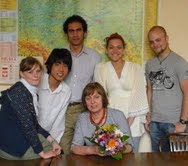
Students and Faculty in Polish Classroom

A student who recently returned from one of their programs had this to say “I thought this program was amazing! I have no complaints about it at all. It was the best time of my life. The program administration were beyond helpful. I met the most wonderful people through this program that I am still friends with. I learned a great deal of Polish and was able to earn 5 credits at my university! The best part of this program, is the helpfulness of the administration. They are there for you through the whole process, even throughout your stay in Poland.”

Another student from a summer program in Wroclaw, Poland said “Wroclaw is an amazing city to go to in Poland. It is so beautiful and charming and everyone that I met there was friendly and caring. If you want to actually learn Polish, this is the program for you.” Read even more from this review here.

Krakow, Poland

Krakow, Poland from above

Still looking for more information on Study Abroad Poland? They have a fantastic website with answers to all of your questions as well as great resources and tips. Get in touch with them to find out more and apply today.

Want to read insider reviews from fellow study abroad students? Click here to find your perfect program!


John Cabot University: Spend Your Summer in Rome

Roman neighborhood

Typical Roman Neighborhood

Picture yourself spending 5 weeks this summer immersed in the Trastevere neighborhood of Rome, Italy at the beautiful John Cabot University.”Trastevere” comes from the latin phrase “across the Tiber” as it’s located on the west bank of the Tiber River. Study, live and play in this stunning city, as if it were your own. John Cabot University is an American University located in the heart of the eternal city, Rome, Italy. Students interested in taking classes in English, yet living and studying abroad in Italy should highly consider spending their summer in Rome. Here’s everything you need to know. Continue reading

Guest Post: Dr. Tara Keenan from John Cabot University in Rome

Rome: Castel Sant Angelo

photo credit:
Art History Images

Today, Abroad101 is so lucky to have a guest blog post written by Dr. Tara Keenan, a writing instructor at John Cabot University in Rome, Italy.

Tara Keenan received her BA and MA from New York University. She attended a study abroad program in Ireland where she first learned about intercultural dialogue and global citizenship. Afterward, she taught high school English in New York and then decided to attend Dublin’s Trinity College for her Ph.D. in European History focusing on feminism in Ireland. Upon finishing that program and publishing a book entitled, “Irish Women and Street Politics”, she moved back to New York where she directed a local office of the New York Civil Liberties Union for three years. During that time she taught history and politics at various colleges and universities in New York including Fordham University and CUNY.  She’s currently a writing instructor and the coordinator of the John Cabot University Writing Center in Rome. Continue reading

Staying Fit While Studying Abroad

Abroad101 is please to have Monica, a study abroad student with College Year in Athens, contribute to our blog.

Gyros, baklava, spaghetti, gelato, pizza… Just some foods amongst many that study abroad students look forward to eating when they get to their destination country. Even the smells of these foods are hard to resist when they’re filling the air as you walk through the neighborhoods. It’s simple to say, “Whatever, I’ll lose the weight when I get home,” but we all know it’s much easier said than done. For people who like to live a healthy lifestyle, studying abroad makes that become a bit of a challenge. But, there are ways to stay in shape while being abroad, so don’t fret. Continue reading