Spending a semester or year in Antwerp rarely unfolds the way you expect. The reality of studying abroad in this Belgian port city goes far beyond classroom credits and weekend excursions.
It quietly forces you to grow in ways that feel uncomfortable at first, then essential. From navigating three languages before lunch to rethinking assumptions you never knew you held, Antwerp becomes a laboratory for skills no syllabus can quite capture.
How Multilingualism Rewires Your Brain and Social Life
One of the defining features of student life in Belgium is its cultural diversity, where the multilingual environment exposes students to Dutch, French, and German, enriching their cultural awareness and providing a unique learning experience.
Walking to class means hearing Flemish instructions at the tram stop, switching to French at a café, and defaulting to English with your international cohort. This linguistic fluidity isn’t just practical.
Students who study abroad may have greater intercultural proficiency, increased openness to cultural diversity, and become more globally minded than their peers who remain back on campus.
The constant code switching does more than build vocabulary. It trains your ear to read context, mood, and social cues across linguistic divides. You learn to listen harder, clarify faster, and apologize gracefully when things get lost in translation. These micro-adjustments become second nature, sharpening communication skills that transfer directly into multicultural workplaces.
More than 90% of mobile students reported that they improved their soft skills, including their knowledge of other countries, the ability to interact and work with people from different cultures, adaptability, foreign language proficiency, and communication skills.
Cultural Immersion Beyond the Scheldt River at Antwerp
Antwerp river cruises are one way travelers first encounter the city, gliding past its medieval architecture and Gothic spires.
These waterways offer a snapshot of how the Scheldt River has shaped Antwerp’s identity as a trading hub for centuries. Visitors on these cruises, often operated by companies like Celebrity Cruises, witness the contrast between historic guild houses and the modern MAS Museum rising along the waterfront.
But living in Antwerp as a student means moving well past the postcard views.
More than half of the inhabitants today are of foreign origin, with 171 different nationalities, and in 2019, Antwerp became a majority–minority city, which means that its residents consist of a wide range of minorities and that no community has a majority.
This demographic reality shapes daily experiences in profound ways. You might join a student association focused on African heritage one week and attend a Moroccan community event the next, each offering perspectives that challenge comfortable narratives about identity and belonging.
The cultural landscape of Antwerp is teeming with artistic treasures and vibrant experiences, with the Royal Museum of Fine Arts housing a vast collection of Flemish and European art, featuring works by renowned artists such as Rubens, Van Dyck, and Ensor.
These institutions become regular haunts, not tourist checkboxes, where you begin recognizing how historical art movements still influence contemporary fashion and design throughout the city.
Independence, Budgeting, and Problem Solving Under Pressure
No orientation packet fully prepares you for the logistics of independent living abroad.
The first months abroad can be intense, but when a city is easy to learn, you have more mental space for your studies and social life.
Antwerp’s compact size and efficient public transit make practical navigation manageable, freeing mental bandwidth for deeper challenges like managing finances across currencies, understanding Belgian healthcare systems, and navigating bureaucratic processes in a foreign language.
These aren’t academic exercises. They’re the daily frictions that force resourcefulness. You learn to read rental contracts in Dutch with the help of translation apps and patient landlords. You figure out which grocery stores offer student discounts and how to stretch a monthly budget when the euro exchange rate shifts.
More than 90% of education abroad alumni say that education abroad helped them build job skills.
The resilience you develop troubleshooting visa extensions or navigating unfamiliar banking systems becomes part of your professional toolkit.
One overlooked lesson involves failure management. Not every plan works out. Roommate conflicts arise. Language barriers cause genuine confusion. Homesickness hits unexpectedly. Antwerp teaches you to sit with discomfort, ask for help when needed, and recalibrate expectations without giving up entirely.
Study abroad tips often emphasize the importance of embracing these challenges as growth opportunities rather than setbacks.
Career Capital You Can’t Quantify Immediately
Employers increasingly value the intangible skills forged through international education.
Mobile students are more likely to get managerial positions in their future careers and are less likely to experience long-term unemployment.
But the advantages go beyond resume bullet points. Studying in Antwerp cultivates adaptability, the ability to enter unfamiliar environments and contribute meaningfully without extensive handholding.
You learn how to build networks from scratch in contexts where your usual social scripts don’t apply.
Experiential learning abroad contributes to cognitive development, behavioral change, skill development, and increased employability.
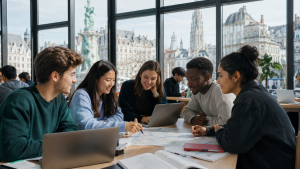
Belgian universities emphasize group projects with international teams, forcing you to negotiate conflicting work styles, time zones, and cultural approaches to deadlines and authority. These experiences mirror the realities of global business operations far more accurately than most domestic coursework.
International education benefits extend into long-term career trajectories in ways that often surprise students years later. The confidence to relocate for opportunity, comfort navigating cross-border professional environments, and the credibility that comes from demonstrated cultural competence all stem from choices made during months spent figuring out life in a city like Antwerp. Research on study abroad outcomes consistently demonstrates these sustained advantages across multiple career stages.
The Unplanned Education in Global Perspective
Perhaps the most significant lesson Antwerp teaches is perspective itself. Living among cultural diversity data reshapes how you understand power, privilege, history, and identity. Conversations with classmates from different continents reveal how provincial your assumptions might have been about politics, economics, or even basic social norms.
For many students, the decision is a balance between academic fit and practical reality, including language, tuition costs, and future opportunities, with Belgium offering possibilities for graduates to remain in the country for a period after finishing their studies to explore work opportunities.
This policy reflects a broader European approach to integrating international talent, exposing you to immigration systems and labor markets that function differently than your home country.
The education happens in the margins. Late-night kitchen conversations about healthcare systems, economic inequality, or climate policy with roommates from five different countries. Attending student protests or cultural festivals that center histories you never encountered in textbooks. Realizing that your home country’s media narrative represents just one angle among many competing interpretations of global events.
Antwerp doesn’t hand you these insights packaged neatly. They accumulate slowly through repeated exposure to difference, through making mistakes and being corrected gently by friends, through recognizing patterns in how societies organize themselves around values that aren’t universal but culturally specific. You leave with questions you didn’t arrive with, which might be the entire point.
The city teaches you that discomfort often signals learning, that fluency extends far beyond language, and that the most valuable education sometimes looks nothing like a classroom at all.