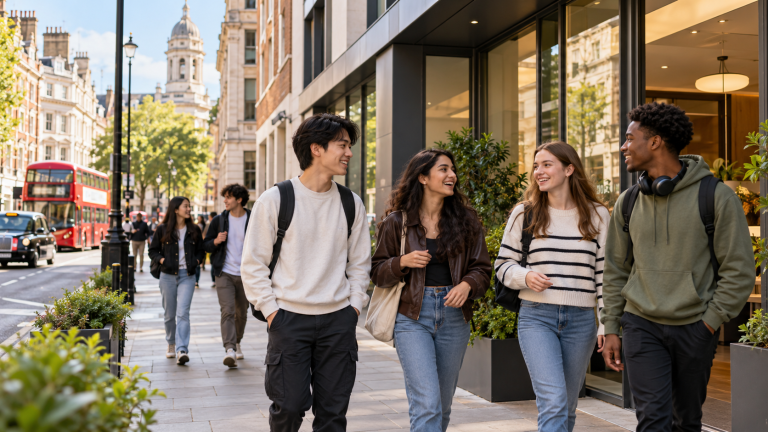
A semester at a Houston-area university comes with a specific kind of culture shock for anyone used to European or Asian cities built around walking and public transit. Houston sprawls in a way that surprises most exchange students in the first week, and figuring out how to actually get around on a student income, without defaulting to rideshares for every single errand, takes some upfront planning that doesn’t get covered in orientation week.
A rental is often the more realistic option than it sounds
For weekend trips, a semester-long excursion to Galveston, or simply reaching neighborhoods the city’s limited public transit doesn’t touch, Houston car rental options work out cheaper than relying on multiple rideshare journeys over the course of a day, especially when the cost is split between friends. Booking by the day rather than committing to a longer rental keeps costs down for anyone testing the waters before deciding whether it’s worth doing more than once a semester.
METRORail covers more than students expect, and it’s genuinely cheap
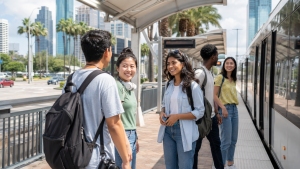
The city’s light rail system, METRORail, runs three lines connecting downtown, the Texas Medical Center, and the Museum District. Eligible students may qualify for discounted fares through participating colleges and universities. It won’t get you everywhere, since Houston’s public transit network is limited compared to older US cities, but for anyone based near a campus along the Red Line, it covers the Museum District’s free-admission days, downtown’s restaurant scene, and connections to the medical center without needing a car at all. Trains run regularly throughout the day, making METRORail one of the easiest ways to reach downtown, the Texas Medical Center, and the Museum District without a car.
The Menil Collection is one of the best free stops in the city
Free admission, world-class art, and a walkable campus of buildings make the Menil Collection one of the better ways to spend an afternoon without touching a budget at all. It sits close enough to the Museum District that combining a visit with a stop at the Menil’s Rothko Chapel, also free, turns into a half-day outing that won’t hit your budget beyond a METRORail fare. Neither location gets the tourist crowds that the bigger, ticketed museums draw, which makes for a quieter, more contemplative visit than a Saturday afternoon at somewhere like the Museum of Fine Arts.
Rice Village works as a low-cost hangout, not just a shopping trip
Located near Rice University, Rice Village has enough casual, student-budget-friendly restaurants and coffee shops that it functions as a social hub without requiring anyone to actually spend on the retail side of things. It’s walkable once there, easy to reach by rail or a short rideshare from most campus areas, and the kind of place that works for a study session at a coffee shop just as well as it does for a weekend hangout with friends from a program.
Food trucks near most campuses beat the cost of a sit-down meal
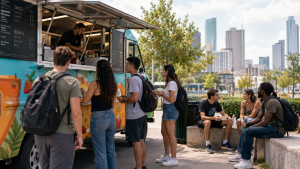
Houston’s food truck scene runs deep, and the clusters near university areas tend to serve genuinely good Tex-Mex, Vietnamese, and Central American food at prices well below what a restaurant would charge for the same quality. A taco or a banh mi from a truck near campus costs a fraction of what a comparable sit-down meal runs, and the turnover of trucks means the options rotate enough that eating from the same cluster twice a week doesn’t get repetitive.
Splitting rideshares becomes second nature fast
For trips the rail doesn’t cover and a rental doesn’t make sense for, splitting a rideshare fare three or four ways with roommates or program-mates turns an otherwise expensive per-person cost into something closer to what a single bus fare would run elsewhere. Most students figure this out within the first month simply by comparing notes with classmates, but it’s worth building into the budget from day one rather than learning it the expensive way after a few solo rides across town.
Plan outings around what’s actually near the rail line first
The single biggest budget mistake first-semester students make in Houston is planning a day around an attraction without first checking whether it’s near a METRORail stop or genuinely walkable from one. Building weekend plans around the Museum District, downtown, and the medical center corridor, all of which sit along the rail line, keeps transportation costs low by default. Save the car rental days for the trips that genuinely require them, like a Galveston beach day or a weekend exploring somewhere the rail simply doesn’t reach.
Houston isn’t an easy city to navigate without a car, and pretending otherwise does most exchange students a disservice. But between the rail line’s coverage of the areas that matter most, a rental for the days that need one, and a bit of planning around which neighborhoods actually connect to campus, a semester here doesn’t have to mean choosing between seeing the city and staying within a student budget.