
Studying abroad is an exciting experience. You’re adjusting to a new culture, exploring unfamiliar cities, and navigating a different academic environment. But along with all the excitement come a few unexpected challenges. Something as simple as breaking your glasses can quickly turn into a stressful situation.
For students who rely on glasses every day, even a small issue like a loose screw or cracked frame can disrupt basic activities such as reading lecture slides, studying in the library, or finding your way around a new campus. The good news is that most eyewear problems can be managed with a few practical steps until you find a permanent solution.
If your glasses break while studying abroad, here are seven helpful things you can do to get back on track quickly.
1. Stay Calm and Assess the Damage
The first thing to do is take a moment to look closely at what actually happened. Not all damage means your glasses are unusable.
Check for common problems such as:
- A loose or missing screw
- A slightly bent frame
- A cracked lens
- A broken arm (temple)
- A frame snapped at the bridge
Sometimes the issue looks worse than it really is. For example, if the frame is bent slightly, it might still be wearable until you get it adjusted. If a screw has come loose, tightening it may fix the problem immediately.
Understanding the exact damage will help you decide whether you can temporarily fix the glasses or if you need professional help.
2. Use a Temporary Fix
If the damage is minor, a temporary fix can help you keep using your glasses until you find a proper repair.
Students often rely on quick solutions such as:
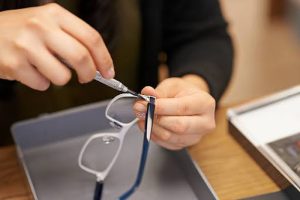
- Tightening screws with a small eyeglass screwdriver
- Using clear tape for cracked frames
- Carefully bending metal frames back into shape
- Using an eyeglass repair kit
Small repair kits are inexpensive and often include screws, nose pads, and a tiny screwdriver. Many pharmacies or convenience stores sell them, and they can be a lifesaver in situations like this.
These quick fixes won’t last forever, but they can buy you enough time to continue attending classes or studying comfortably.
3. Look for a Local Optical Shop
If the damage is more serious, the best solution is to visit a local optical shop.
Most cities with universities will have optical stores that can repair glasses quickly. Many repairs, such as tightening screws, adjusting frames, or replacing nose pads, can be done in just a few minutes.
Opticians can also help with:
- Frame adjustments
- Lens replacements
- Minor frame repairs
- Replacing missing screws or nose pads
Even if your frames were purchased in another country, many optical shops are happy to help with simple fixes.
Searching online for “optician near me” or asking university staff for recommendations can help you find a reliable store nearby.
4. Check If Your Travel or Health Insurance Covers Vision Care
Many students forget to check their insurance policies until something goes wrong.
Some travel insurance or international health insurance plans include coverage for eyewear repairs or replacements while you’re abroad. This may include reimbursement for emergency purchases or optical services.
Review your policy to see if it includes:
- Eyewear replacement coverage
- Emergency vision care services
- Optical repairs
If you’re unsure, contacting your insurance provider can clarify what options are available.
Even partial reimbursement can make replacing your glasses much easier.
5. Consider Ordering Replacement Glasses Online
If your glasses are beyond repair, ordering a new pair online may be the fastest and most convenient option.
Many students choose online glasses that take insurance because it allows them to use their prescription while managing costs through their existing insurance benefits.
Online ordering can be helpful when you are abroad because it allows you to:
- Use your existing prescription
- Compare frame styles and prices
- Ship glasses directly to your current location
Just make sure you have a copy of your prescription. If you don’t, you may be able to request it from your eye doctor back home.
6. Use Contact Lenses or Backup Glasses
If you packed wisely before leaving home, you might already have a backup solution.
Many students bring:
- A spare pair of glasses
- Contact lenses
- Prescription sunglasses
If you have either of these, switching temporarily will help you continue with your normal routine while waiting for repairs or replacements.
Having a backup pair is especially helpful when traveling because it prevents small problems from becoming major disruptions.
7. Keep a Backup Plan for the Future
Once you’ve solved the immediate problem, it’s a good idea to prepare for the future.
Simple precautions can save you from repeating the same situation later in your study abroad experience.
Helpful habits include:
- Carrying a spare pair of glasses
- Packing a small repair kit
- Keeping a digital copy of your prescription
- Storing glasses in a protective case
- Avoiding placing glasses loosely in bags or backpacks
Students often move between classes, libraries, cafés, and travel destinations while abroad. Protecting your eyewear becomes even more important when you’re constantly on the go.
Taking a few extra precautions now can prevent unnecessary stress later.
Conclusion
Breaking your glasses while studying abroad can feel frustrating, especially when you’re already adjusting to a new environment. But most situations are manageable with a calm approach and a few practical steps.
By assessing the damage, using temporary fixes, visiting a local optical shop, or ordering replacement glasses online, you can quickly solve the problem and return to your studies.
Most importantly, remember that preparation makes a big difference. Keeping backup glasses, a repair kit, and your prescription on hand can turn a stressful moment into a minor inconvenience.
With the right plan, even unexpected situations like broken glasses won’t interrupt your study abroad adventure.